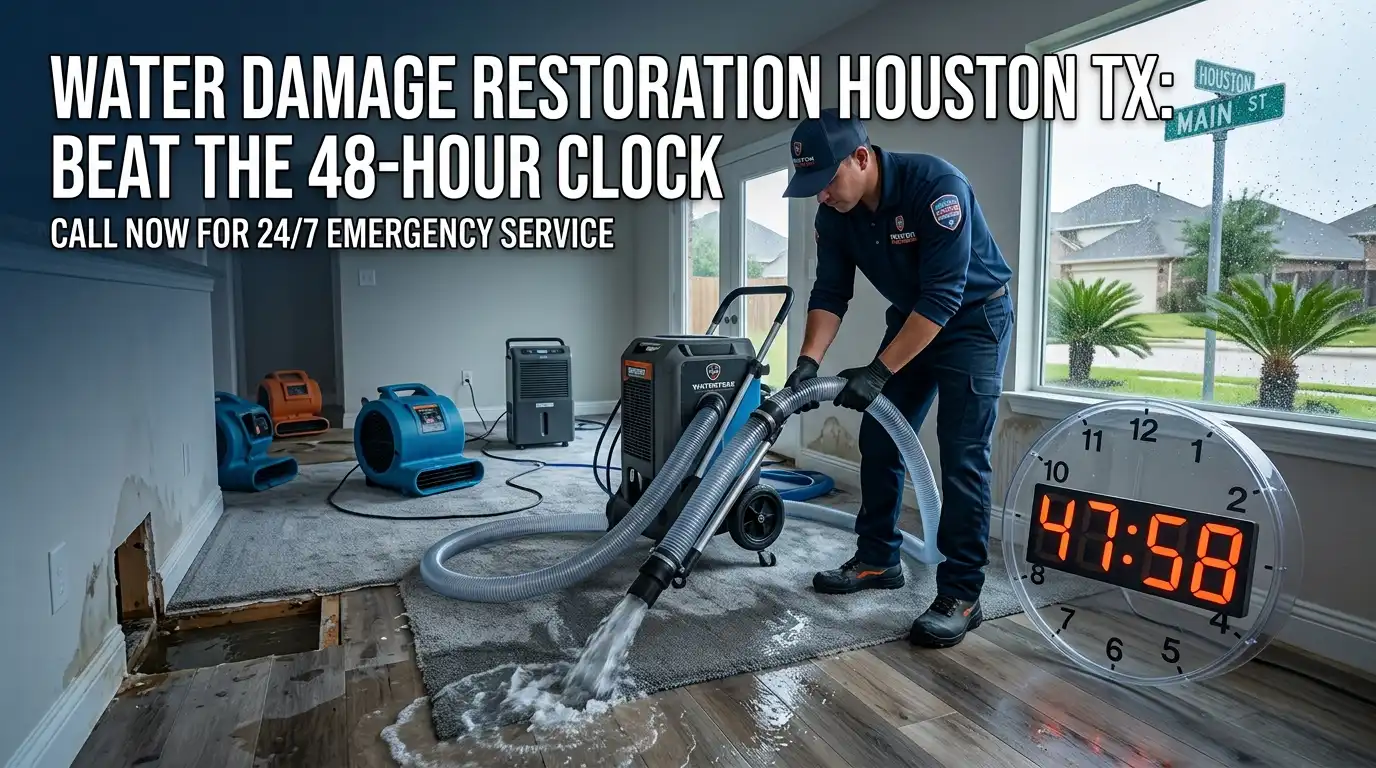
Wet drywall starts growing mold within 24 to 48 hours. In Houston, high humidity, slab foundations, and sudden storms shrink that window even further. Fast, correct water damage restoration Houston TX homeowners can trust is the difference between a three-day dry-out and a full mold remediation job. The clock starts the moment water touches your floor, not when you notice it. This article shows you what to do, what professionals measure, and what it costs.
Key Takeaways
- Act inside 48 hours. The EPA and FEMA both identify the 24–48 hour window as the point where mold growth begins on wet materials. Extraction and drying inside that window prevent most mold claims.
- Houston slabs hide water. Concrete slabs absorb moisture and release it slowly under flooring. A dry-looking floor can still read wet on a moisture meter for weeks.
- Water category drives the cost. A clean supply-line leak (Category 1) costs far less to restore than storm or sewage water (Category 3), which requires removing porous materials.
Why Houston Properties Face Higher Water Damage Risk

Houston combines heavy rainfall, flat terrain, and constant humidity. The city averages about 50 inches of rain per year, and clay soils drain slowly. Hurricane Harvey flooded more than 150,000 homes in Harris County in 2017. Many of those homes had never flooded before.
Our field technicians frequently see this in local slab-foundation homes: water enters at the lowest point, wicks up drywall, and sits trapped under vinyl plank flooring. The humid Gulf air slows evaporation. That means water damage restoration Houston TX jobs need more dehumidification than the same job in a dry climate.
| Houston Risk Factor | What It Does to Your Property | Field Example |
|---|---|---|
| Tropical storms and hurricanes | Floodwater (Category 3) enters through doors and weep holes | Harvey (2017), Beryl (2024) |
| Flash flooding | Street water rises faster than drainage clears it | Tax Day Flood (2016), Memorial Day Flood (2015) |
| Freeze events | Pipes in attics and exterior walls burst | Winter Storm Uri (2021) |
| High ambient humidity | Slows drying, feeds mold on damp surfaces | Morning humidity often 85%+ in summer |
| Expansive clay soil | Shifts slabs and stresses under-slab plumbing | Slab leaks in 1960s–1980s homes |
| Aging cast iron drains | Cracks leak sewage under the slab | Common in older Pasadena and Bellaire homes |
Know your specific risk before the next storm. Check your address on the Harris County Flood Control District flood map and note your nearest bayou.
Water Damage Categories and Classes Explained
Every restoration job starts with two labels: category and class. The category describes how contaminated the water is. The class describes how much water and how far it spread. Both come from the IICRC S500 standard (the industry’s water damage restoration standard).
Water Categories vs. Cleanup Action
| Category | Water Source | Contamination Level | Required Cleanup Action |
|---|---|---|---|
| Category 1 (clean) | Supply lines, faucet overflow, water heater | Low | Extract, dry in place, save most materials |
| Category 2 (gray) | Washing machine, dishwasher, toilet overflow (urine only) | Moderate | Extract, apply antimicrobial, remove carpet pad |
| Category 3 (black) | Floodwater, sewage backup, river or bayou water | High | Remove porous materials, full sanitization, containment, PPE |
Categories get worse over time. A clean leak left for 48 to 72 hours in a warm Houston home can degrade into Category 2 or 3. Time turns clean water into contaminated water.
Water Damage Classes
| Class | Description | Typical Drying Need |
|---|---|---|
| Class 1 | Small area, low-porosity materials | Few air movers, 1–2 days |
| Class 2 | Whole room, water wicked up walls under 24 inches | Air movers plus LGR dehumidifiers, 3–4 days |
| Class 3 | Water from above, ceilings and walls saturated | Heavy equipment, 3–5+ days |
| Class 4 | Dense materials (hardwood, concrete, plaster) | Specialty drying, 7–21+ days |
Ask your restorer to name both the category and class on the first visit. That classification sets your scope, equipment count, and insurance estimate.
Emergency Response: What To Do in the First 24 Hours
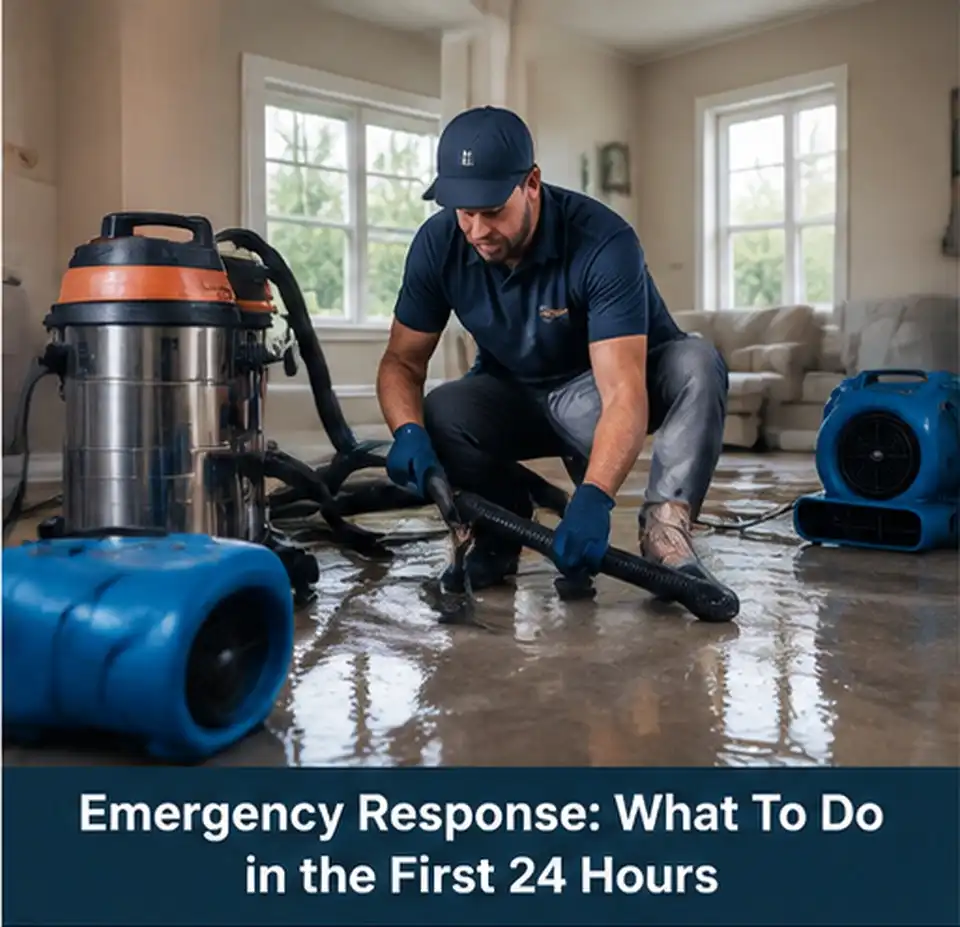
Your first hour decides how much you save. On recent emergency calls in Houston and Sugar Land, the homes with the lowest repair costs were the ones where owners shut off water, cut power, and called for extraction fast. Follow these steps in order.
- Stop the water source. Turn off the main valve, usually at the meter box near the street.
- Shut off power to wet areas. Switch off breakers only if you can reach the panel while standing dry.
- Get people and pets out of Category 3 water. Floodwater and sewage carry bacteria.
- Photograph everything. Record water lines on walls, damaged items, and the source.
- Move valuables up. Lift furniture onto foil or blocks to stop wicking and staining.
- Pull up area rugs. Hang them outside if the water was clean.
- Call your insurer. Report the claim and get a claim number.
- Call a certified restorer. Request moisture mapping, not just a wet vac.
At Bob’s Water Damage Restoration, our 24/7 emergency water extraction team arrives with truck-mounted extractors and thermal imaging cameras to find hidden water fast.
Emergency Do’s and Don’ts
Do:
- Run your AC to pull humidity down if the system and ducts stayed dry.
- Open windows only when outdoor humidity is lower than indoor humidity.
- Keep receipts for hotels, meals, and supplies.
Don’t:
- Run fans if you see or suspect mold. Fans spread spores.
- Use a household vacuum on standing water.
- Turn on ceiling fixtures or lights below wet ceilings.
- Start tearing out drywall before photos and a moisture reading.
Keep a pair of rubber boots and a flashlight near your main water valve. That simple kit cuts minutes off your next emergency.
How Our Structural Drying Process Works
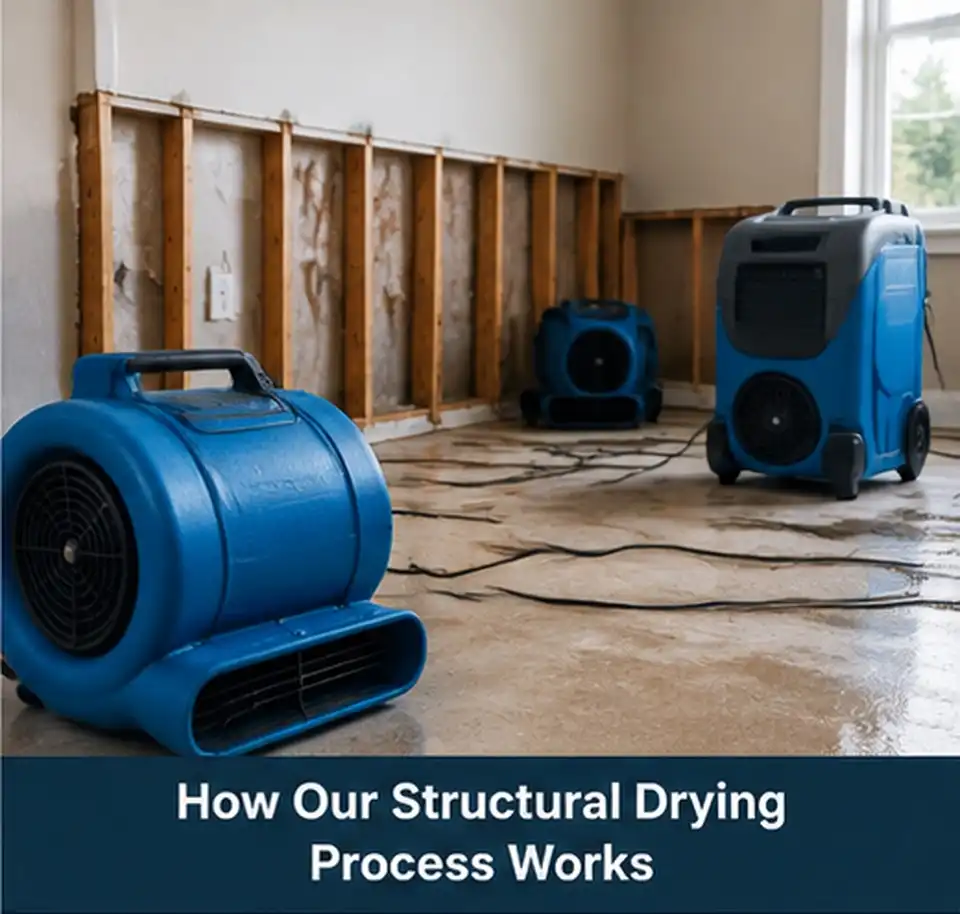
Structural drying removes water from inside building materials, not just surfaces. We control three factors: airflow, temperature, and humidity. Professional water damage restoration Houston TX crews measure all three daily, then adjust equipment until materials hit a dry standard (the moisture reading of unaffected material in the same home).
- Inspect and map moisture. We use pin and pinless meters plus infrared cameras to outline the wet zone.
- Extract standing water. Truck-mounted units pull water from carpet and pad.
- Remove what cannot be saved. Wet pad, swollen baseboards, and flood cut drywall come out.
- Set drying equipment. We place air movers and LGR dehumidifiers based on room volume.
- Open wall cavities. We drill weep holes or use injection drying systems for trapped water.
- Monitor daily. Our technicians log readings and adjust equipment every 24 hours.
- Verify dry standard. We confirm final readings before any rebuild begins.
Drying is a science of measurement, not guesswork. Our certified structural drying services include daily moisture logs you can share with your adjuster.
Drying Equipment Metrics
| Equipment | Purpose | Typical Output | Placement Rule of Thumb |
|---|---|---|---|
| Air mover | Moves air across wet surfaces | 2,000–3,000 CFM | 1 per 10–16 linear feet of wet wall |
| LGR dehumidifier | Pulls moisture from air at low humidity | 100–170+ pints/day | Sized by cubic feet and class |
| Desiccant dehumidifier | Dries dense materials and cool spaces | High grain depression | Hardwood, concrete, crawlspaces |
| Injection drying system | Pushes air into wall cavities | Varies by panel | Behind cabinets and finished walls |
| Thermal imaging camera | Finds hidden moisture patterns | Visual temperature map | Used before and during drying |
| HEPA air scrubber | Captures airborne particles and spores | 500–2,000 CFM | Category 2/3 and mold jobs |
Drying Times by Material Type
| Material | Typical Professional Drying Time | Save or Replace? |
|---|---|---|
| Drywall (Category 1, no swelling) | 2–4 days | Often saved |
| Drywall (Category 3 floodwater) | N/A | Remove at least 12 inches above water line |
| Carpet (Category 1) | 1–3 days | Often saved |
| Carpet pad | N/A | Replace in Category 2/3 |
| Hardwood floors | 7–21 days | Depends on cupping |
| Laminate and LVP | N/A for core | Usually lifted to dry slab |
| Concrete slab | 7–28+ days | Saved, but slow |
| Wall studs (wood framing) | 3–7 days | Saved once dry |
| Fiberglass and cellulose insulation | N/A | Replace |
Ask for a daily drying log, and do not approve rebuild until the final readings match the dry standard.
Slab Foundation Considerations in Houston Homes
Houston slabs hold water longer than any other material in the home. Concrete is porous, and most local homes sit slab-on-grade with flooring glued or floated directly on top. Our field technicians frequently see this in local slab-foundation homes: the LVP flooring looks fine, but moisture readings under it stay high for two to three weeks.
Slab leaks add another layer of risk. Pipes under the slab crack when clay soil shifts. Water can run for months before anyone sees it.
Warning Signs of Under-Slab Water
- Warm spots on tile or concrete (hot water line leak)
- Rising water bill with no new usage
- Sound of running water with all fixtures off
- Cracks in tile or baseboards pulling away
- Musty odor near interior walls
- Cupping in hardwood or swelling in laminate seams
Slab Moisture Testing Methods
| Test | Standard | What It Measures | When We Use It |
|---|---|---|---|
| In-situ RH probe | ASTM F2170 | Relative humidity inside concrete | Before installing new flooring |
| Calcium chloride test | ASTM F1869 | Moisture vapor emission rate | Large slab areas |
| Surface moisture meter | Non-destructive | Relative moisture in top layer | Fast mapping during drying |
| Thermal imaging | Visual scan | Temperature variance | Finding slab leak paths |
Flooring manufacturers set strict slab moisture limits. Installing new floors over a wet slab can void the warranty and trap moisture again. Good water damage restoration Houston TX practice includes RH testing before any rebuild on a slab.
Before your new flooring goes down, ask your contractor for a written slab RH reading.
Mold Prevention After Water Damage
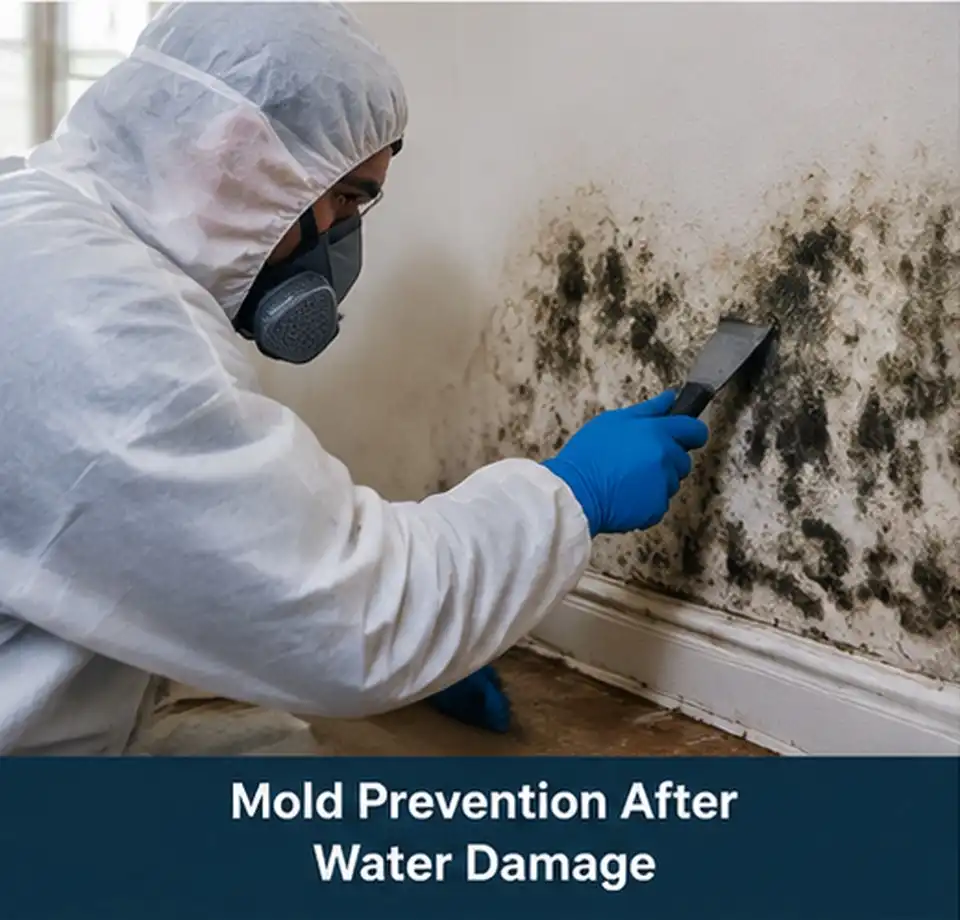
Mold prevention depends on speed and dryness. According to the EPA’s Table 1 guidance on water damage cleanup and mold prevention, drying wet materials within 24–48 hours helps avoid the need for mold remediation. The EPA also notes that ceiling tiles, cellulose insulation, and fiberglass insulation should be discarded and replaced once wet.
The FEMA guide to mold and mildew in flood-damaged homes reaches the same conclusion. FEMA states that mold can grow within 24 to 48 hours and recommends removing soaked wallboard to a foot above the water mark. Houston heat makes that timeline a real threat, not a worst case.
EPA Water-Damaged Material Actions (Summary)
| Material | EPA-Recommended Action |
|---|---|
| Carpet and backing | Extract water, dehumidify, use fans; dry within 24–48 hours |
| Ceiling tiles | Discard and replace |
| Concrete or cinder block | Extract water, dry with dehumidifiers, fans, or heaters |
| Wallboard (drywall) | Dry in place if no swelling and seams intact; otherwise replace |
| Upholstered furniture | Extract and dry; may be hard to dry within 48 hours |
| Wood surfaces | Remove moisture immediately; use dehumidifiers, gentle heat, fans |
| Books and papers | Discard, copy, or freeze-dry valuable items |
The EPA adds a key limit. Its Table 1 applies to clean water only. Sewage or contaminated floodwater requires PPE and containment under OSHA, and fans should not run until the water is confirmed clean.
Mold Inspection Checklist
- Musty odor in closets, cabinets, or wall bases
- Discoloration on drywall, ceilings, or baseboards
- Peeling paint or bubbling wallpaper
- Visible growth on the back of removed baseboards
- Indoor humidity above 50% for several days
- Allergy symptoms that improve when you leave the house
If growth covers more than 10 square feet, or shows up in your HVAC system, call for professional mold remediation instead of cleaning it yourself.
Buy a $15 digital hygrometer and keep indoor humidity between 30% and 50% after any water event.
What Does Water Damage Restoration in Houston TX Cost?
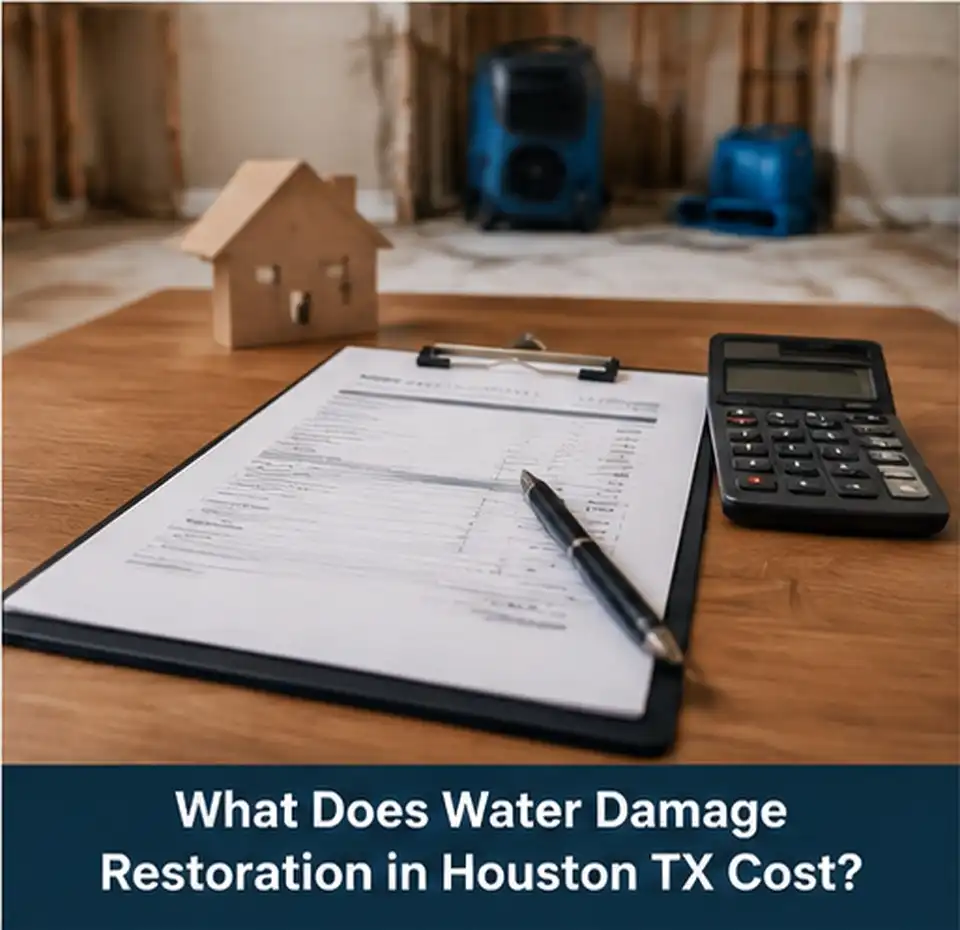
Cost depends on category, square footage, and drying time. Category 3 work costs more because it requires removal, sanitization, and PPE. The ranges below reflect typical water damage restoration Houston TX pricing in 2026. Final costs vary by home and scope.
Mitigation Cost Breakdown
| Service | Typical Houston Range (2026) | Notes |
|---|---|---|
| Inspection and moisture mapping | $0–$300 | Often free with service |
| Water extraction | $1–$2 per sq ft | Truck-mounted equipment |
| Category 1 mitigation | $3.50–$5 per sq ft | Clean water |
| Category 2 mitigation | $4.50–$7 per sq ft | Includes antimicrobial |
| Category 3 mitigation | $7–$15+ per sq ft | Removal, sanitizing, containment |
| Air mover | $25–$40 per day | Several per room |
| LGR dehumidifier | $70–$150 per day | 1–2 per affected area |
| Drywall flood cut | $2–$4 per sq ft | Disposal included in most quotes |
| Mold remediation | $1,500–$6,000+ | Size and containment drive cost |
| Slab leak detection | $150–$500 | Electronic and thermal methods |
| Slab leak repair | $1,000–$4,500+ | Tunneling costs more |
Real-World Job Examples
| Scenario | Category / Class | Typical Range |
|---|---|---|
| Burst supply line under kitchen sink | Cat 1 / Class 2 | $1,500–$4,000 |
| Washing machine overflow into hallway | Cat 2 / Class 2 | $2,500–$6,000 |
| Attic pipe burst after freeze | Cat 1 / Class 3 | $4,000–$10,000 |
| 6 inches of floodwater, whole first floor | Cat 3 / Class 3 | $15,000–$40,000+ |
| Sewer backup in two bathrooms | Cat 3 / Class 2 | $4,000–$12,000 |
DIY vs. Professional Restoration
DIY Pros:
- Lower upfront cost for tiny, clean spills
- Immediate action while you wait for help
DIY Cons:
- No moisture meters or thermal cameras to find hidden water
- Rental equipment is often undersized for Houston humidity
- Missed moisture can lead to denied mold claims
- No drying documentation for your insurer
Professional Pros:
- Commercial LGR equipment sized to the job
- Daily logs and photos for insurance
- Direct billing with many carriers
Professional Cons:
- Higher upfront cost if uninsured
- Scheduling demand spikes after major storms
Request an itemized estimate written in Xactimate format, the pricing software most insurance adjusters use.
Insurance and Documentation Tips
Standard homeowners policies cover sudden water, not floodwater. A burst pipe is usually covered. Rising water from a storm requires a separate flood insurance policy through the NFIP or a private carrier. That gap catches many Houston homeowners off guard.
Coverage Snapshot
| Water Event | Homeowners Policy | Flood Policy |
|---|---|---|
| Burst pipe | Usually covered | Not needed |
| Appliance failure | Usually covered (damage, not the appliance) | Not needed |
| Slow leak over months | Often denied | Not covered |
| Storm surge or rising floodwater | Not covered | Covered |
| Sewer backup | Only with endorsement | Sometimes, if caused by flood |
| Roof leak from wind damage | Usually covered | Not needed |
Claim Documentation Checklist
- Photograph the source before repairs.
- Record video of every affected room.
- Save damaged samples like carpet and pad if possible.
- Request daily moisture logs from your restorer.
- Keep all receipts for hotels, meals, and supplies.
- Get the adjuster’s name and claim number in writing.
When storm water enters your home, our flood cleanup and restoration crews document every step for NFIP and private claims.
File your claim within 24 hours and ask your insurer whether they require their own inspection before tear-out.
How to Choose a Water Damage Restoration Company in Houston TX
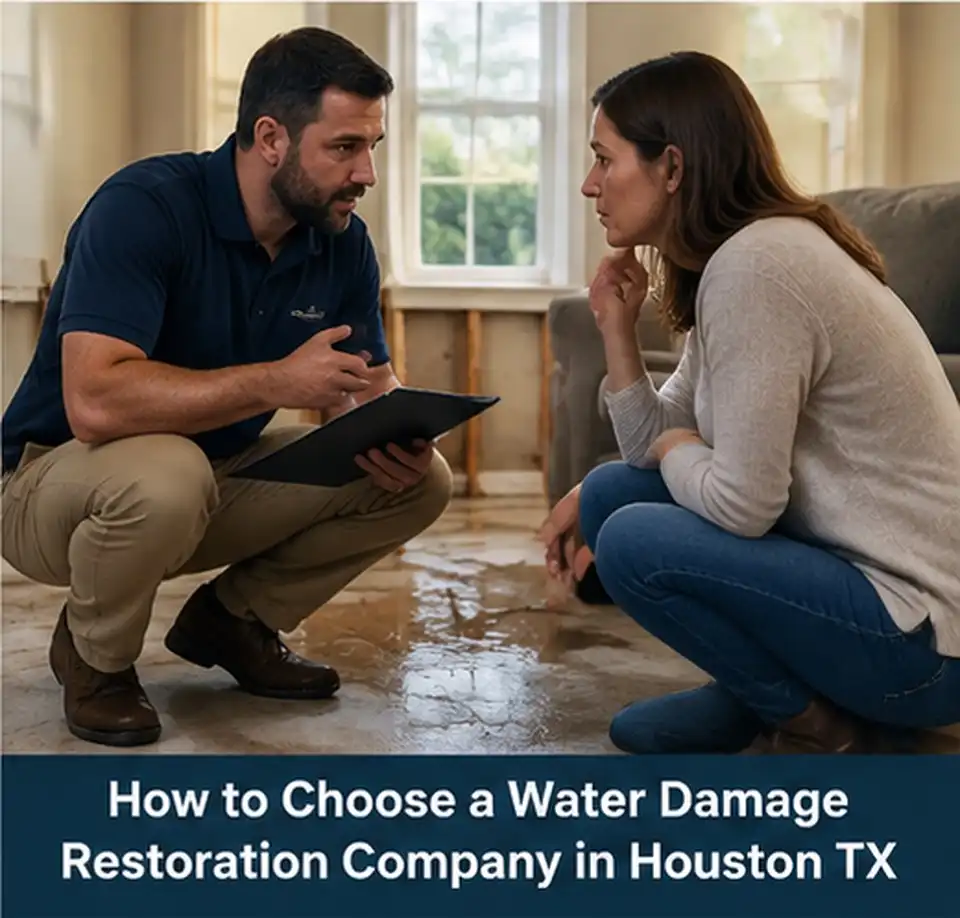
The right restorer measures, documents, and explains. Reviews help, but credentials and process matter more. If you have spent a stormy season in Texas, you know how many out-of-town crews appear after a hurricane. Local crews stay accountable after the storm passes.
Contractor Vetting Checklist
- IICRC certification (WRT for water, ASD for drying, AMRT for mold)
- 24/7 local response with a real dispatcher
- Proof of insurance and liability coverage
- Moisture mapping and daily logs included
- Written estimate before work starts
- Clear plan for Category 3 containment
- Reviews that mention response time and communication
Red Flags to Avoid
- Demands for full payment upfront
- No moisture meter on the first visit
- Pressure to sign an assignment of benefits on the spot
- Promises of “free” restoration regardless of coverage
- Plans to install new flooring without slab testing
Many searches for “free” water damage restoration Houston TX services really mean free inspections. Inspections often are free. Restoration work is paid by you, your insurer, or both.
Ask any contractor three questions: What category is this? What class? What is your dry standard?
Our Houston-Area Service Areas
Response time shapes your final repair bill. We position equipment across the greater Houston region so crews reach most calls fast. Each community has its own water risks.
| Service Area | Common Water Damage Causes We See |
|---|---|
| Houston | Flash flooding, slab leaks, aging cast iron drains |
| Pasadena | Storm surge, older plumbing, sewer backups |
| Pearland | Clear Creek flooding, new-build plumbing failures |
| Sugar Land | Brazos River flood risk, attic water heater leaks |
| League City | Hurricane rain, Clear Creek overflow, roof leaks |
Whether you need water damage restoration Houston TX service or help in a nearby suburb, our burst pipe recovery service and full mitigation team cover the entire region.
Save our 24/7 number in your phone before hurricane season starts on June 1.
FAQs
How long does water damage restoration take?
Drying takes 3 to 5 days for most Category 1 jobs. Rebuild adds 1 to 3 weeks depending on materials and scheduling.
Can I stay in my home during drying?
Yes, for most Category 1 jobs. Category 3 jobs and mold remediation often require you to leave affected areas.
Will my drywall need to be replaced?
Not always. The EPA says wallboard can dry in place with no swelling and intact seams. Floodwater-soaked drywall needs a flood cut.
Why is my house still humid after the water is gone?
Houston air carries heavy moisture. Wet slabs and wall cavities keep releasing water vapor until dehumidifiers pull it out.
Does homeowners insurance cover mold?
Coverage is limited. Many policies cover mold only when it results from a covered, sudden water event reported promptly.
How do I know if I have a slab leak?
Look for warm floor spots, rising water bills, and running water sounds. A leak detection test confirms the location.
What does water damage restoration Houston TX homeowners need after a hurricane?
Most need Category 3 extraction, flood cuts, antimicrobial treatment, and documented drying for flood insurance claims.
Protect Your Property Before the Next Storm
Fast extraction and measured drying save Houston homes. The 24–48 hour window, backed by both EPA and FEMA guidance, is the single most important number in water damage. Every hour you wait adds cost and mold risk. Know your water category, insist on moisture readings, and never rebuild over a wet slab.
Your next step: Locate your main water shutoff today, test that it turns, and store Bob’s Water Damage Restoration’s 24/7 number where your whole household can find it.
2 Comments