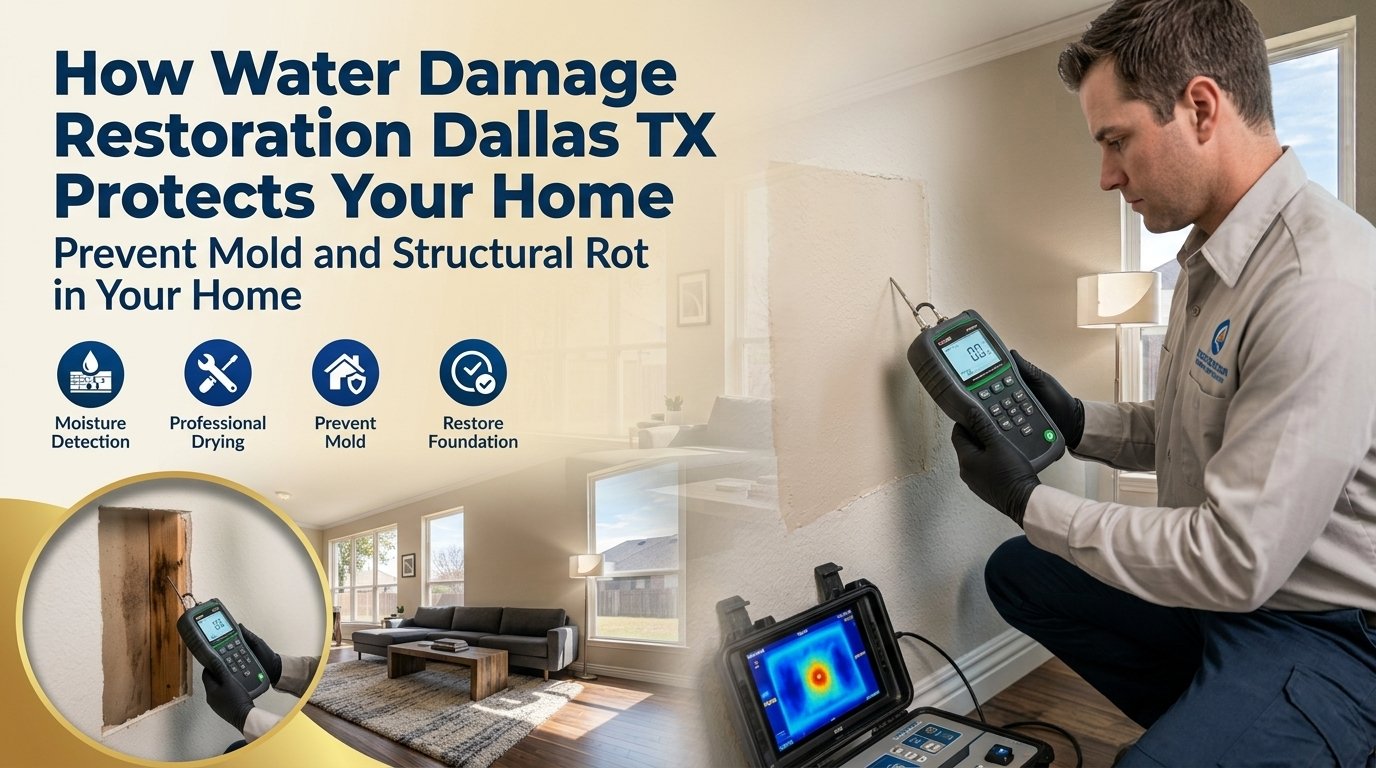
A single flash flood, a burst supply line, or a hail-cracked roof can soak a Dallas home in under an hour. The real damage starts later, when hidden moisture moves into drywall, subfloors, and the edges of your slab foundation. Fast, standards-based water damage restoration Dallas TX homeowners can trust is what stops a $2,000 cleanup from turning into a $20,000 rebuild. Below, we break down exactly how the process works, what it costs, and how to protect your claim.
Key Takeaways
- The 24 to 48 hour window is real. CDC guidance says homes should be dried fully within 24 to 48 hours after a flood to prevent mold, and North Texas summer heat speeds that timeline up.
- Dallas clay soil and slab foundations hide water. Moisture often wicks under baseboards and tack strips where you cannot see it, so moisture mapping with meters and thermal cameras matters more than visual checks.
- Your policy type decides your payout. Standard Texas homeowners policies usually cover sudden pipe bursts but exclude rising floodwater, and NFIP flood coverage has a 30-day waiting period before it takes effect.
Why Dallas Properties Face Unique Water Risks
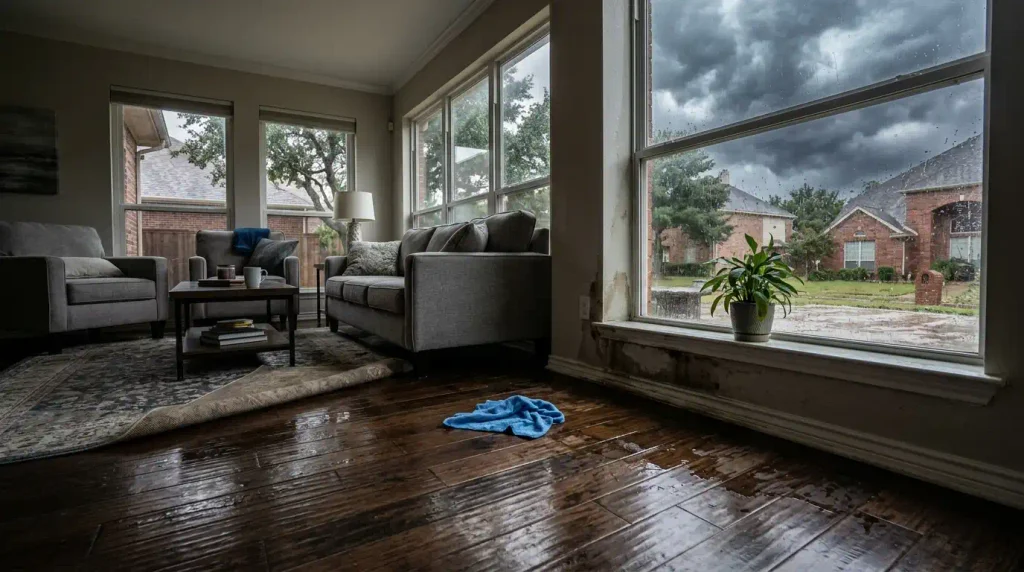
Dallas sits on Blackland Prairie clay, one of the most expansive soils in the country. It swells when wet and shrinks during drought. That movement stresses plumbing lines, slab foundations, and wall joints.
The weather adds pressure. North Texas sees severe spring storms, large hail events, and sudden flash flooding. In August 2022, parts of east Dallas recorded more than 10 inches of rain in roughly a day, flooding homes that had never taken on water before. Winter is not safe either. Winter Storm Uri in 2021 froze and burst pipes across thousands of DFW homes.
Common Water Damage Sources in Dallas Homes
| Source | Peak Season | Typical Category | What We Usually Find |
|---|---|---|---|
| Flash flooding | April to June, fall storms | Category 3 | Saturated carpet, drywall wicking 12 to 24 inches up |
| Hail and roof damage | March to June | Category 1 to 2 | Wet attic insulation, stained ceilings |
| Frozen pipe bursts | December to February | Category 1 | Water inside walls and under flooring |
| Slab leaks | Year-round, worse in drought | Category 1 | Warm floor spots, cracked tile, rising water bills |
| Water heater failure | Year-round | Category 1 to 2 | Garage and closet damage, wet framing |
| AC condensate overflow | May to September | Category 2 | Ceiling stains, mold near air handlers |
| Sewer backup | Heavy rain events | Category 3 | Contaminated flooring, odor, health risks |
On recent emergency calls in Dallas, our crews have found that the visible puddle is rarely the full story. The water you cannot see is the water that causes the most damage.
What IICRC S500 Means for Water Damage Restoration Dallas TX
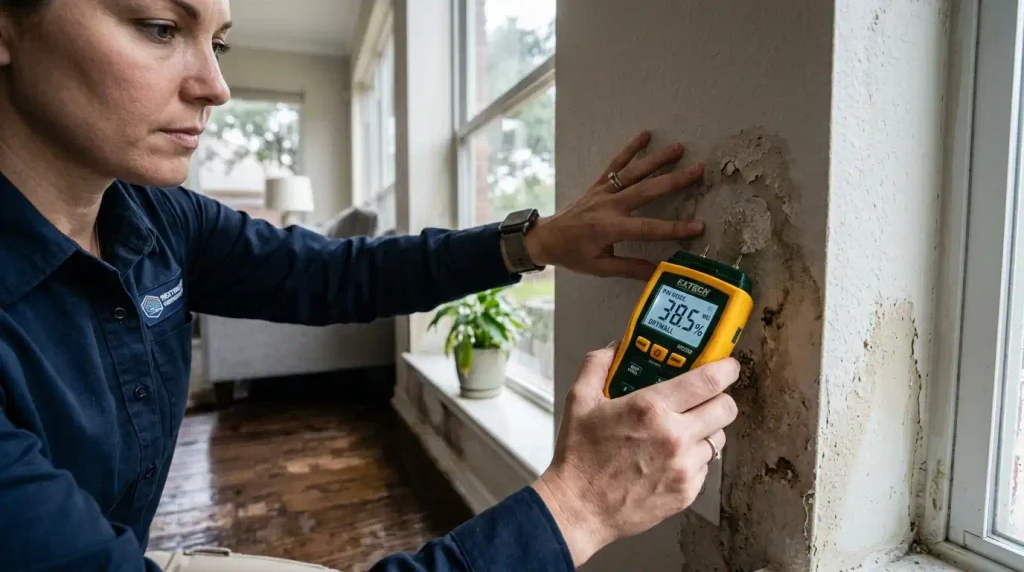
The IICRC S500 is the industry’s main standard for professional water damage work. It sets rules for water categories, drying classes, safety, and documentation. Insurance adjusters often use it to judge whether a job was done correctly.
Texas does not require a state license for water mitigation itself. However, mold remediation in Texas does require licensing through the Texas Department of Licensing and Regulation (TDLR) for most projects over 25 contiguous square feet. When you compare companies for water damage restoration Dallas TX residents rely on, ask about both IICRC certification and TDLR mold licensing.
What S500 Compliance Looks Like on a Job
- Initial inspection with documented moisture readings
- Category and class assigned before work begins
- Daily monitoring of moisture content, temperature, and humidity
- Drying goals set using readings from unaffected materials
- Photo and log records that support your insurance claim
Water Categories and Drying Classes
Water type decides how we clean. The amount of water and the materials involved decide how we dry. Both shape your timeline, cost, and safety plan.
Water Category vs. Cleanup Action
| Category | Description | Common Dallas Sources | Cleanup Action |
|---|---|---|---|
| Category 1 (Clean) | Sanitary water source | Supply line bursts, ice maker lines, rain through roof | Extract, dry in place when possible, monitor |
| Category 2 (Gray) | Contains contaminants that may cause illness | Dishwasher or washer overflow, AC condensate, toilet overflow (urine only) | Extract, apply antimicrobial, remove carpet pad, dry |
| Category 3 (Black) | Grossly contaminated | Floodwater, sewer backup, toilet overflow with feces | Remove porous materials, sanitize, containment, PPE required |
Clean water does not stay clean for long. Category 1 water can degrade to Category 2 within 48 hours as it contacts building materials and warms up. In a Dallas summer, that shift can happen faster.
Drying Classes Explained
| Class | Evaporation Load | Example | Equipment Need |
|---|---|---|---|
| Class 1 | Low | Small leak, part of one room | Minimal air movers, one dehumidifier |
| Class 2 | Moderate | Whole room, wicking under 24 inches up walls | Standard drying setup |
| Class 3 | High | Water from overhead, saturated walls and ceilings | Heavy air movement and dehumidification |
| Class 4 | Specialty | Hardwood, concrete, plaster, deep pockets | Low-grain refrigerant dehumidifiers, heat drying, mat systems |
What to Do in the First 24 Hours
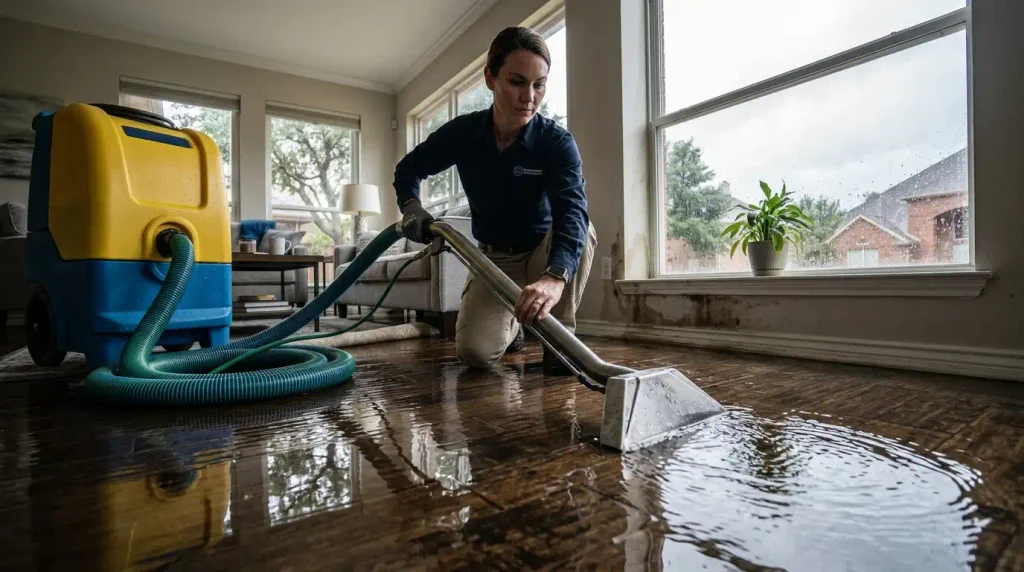
The first day sets the course for everything else. Here is the exact order we give homeowners over the phone.
Emergency Steps Checklist
- Stop the water. Shut off the main valve. In most Dallas homes, it sits in a ground box near the street or along the front foundation.
- Cut power to wet areas. Use the breaker panel only if you can reach it without standing in water.
- Document everything. Take photos and video before you move anything.
- Move valuables. Lift furniture onto foil or blocks to prevent staining.
- Remove standing water safely. Use towels or a wet vac for small Category 1 spills only.
- Do not use a household vacuum. It creates an electrical hazard.
- Avoid floodwater contact. Category 3 water can carry bacteria and sewage.
- Call your insurer. Report the loss quickly and write down your claim number.
- Call a professional crew. Our 24/7 emergency water removal team can begin extraction and moisture mapping the same day.
What Not to Do
- Do not turn on ceiling fans if ceilings are wet or sagging
- Do not run your HVAC if ducts may be contaminated by floodwater
- Do not throw out damaged items before your adjuster sees them
- Do not paint over water stains until materials test dry
Our Step-by-Step Mitigation Process
At Bob’s Water Damage Restoration, we follow the same core process on every job. The details change with the category, class, and building type.
Step 1: Inspection and Moisture Mapping
We use pin and pinless moisture meters, thermo-hygrometers, and thermal imaging cameras. These tools show us how far water has traveled. Our technicians frequently see this in local slab-foundation homes: water spreading 3 to 6 feet beyond the visible wet spot under laminate or carpet.
Step 2: Water Extraction
We remove standing water with truck-mounted or portable extractors. Extraction removes far more water than evaporation ever could. Every gallon we pull out is a gallon your dehumidifiers do not have to process.
Step 3: Controlled Demolition
We remove only what cannot be saved. That often includes wet carpet pad, baseboards, and flood cuts in drywall 2 to 4 feet up. Category 3 losses require removal of most porous materials.
Step 4: Cleaning and Antimicrobial Treatment
We clean surfaces and apply EPA-registered antimicrobials where contamination exists. This step is critical for Category 2 and 3 water.
Step 5: Structural Drying
We set up air movers, dehumidifiers, and specialty systems based on the drying class. We check readings daily and adjust the setup as materials dry.
Step 6: Final Verification
We confirm materials have reached their drying goal before removing equipment. You get a full drying log for your records and your insurer.
Step 7: Repairs and Reconstruction
Once everything tests dry, rebuilding begins. This includes drywall, paint, flooring, and trim.
The Science of Drying a Dallas Home
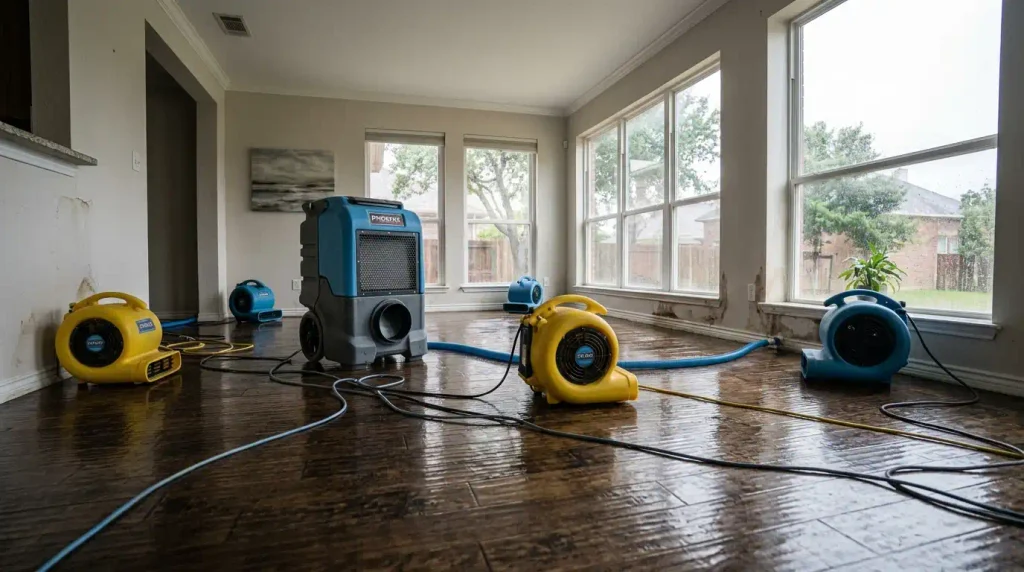
Drying is not about blowing air at a wet wall. It balances airflow, humidity control, and temperature. When one piece is off, drying stalls.
The goal is to pull moisture out of materials and into the air, then remove it from the air. Dallas summers bring high outdoor heat with humid spells from Gulf air. That is why our certified structural drying services use closed drying systems that keep humid outdoor air out.
Drying Times by Material
| Material | Typical Drying Time | Can It Be Saved? | Notes |
|---|---|---|---|
| Drywall | 2 to 4 days | Yes, if Category 1 and caught early | Replace if swelling, crumbling, or Category 3 |
| Carpet | 1 to 3 days | Often, for Category 1 | Carpet pad is usually replaced |
| Carpet pad | Not recommended | Rarely | Low cost to replace, holds bacteria |
| Hardwood flooring | 7 to 21 days | Often, with mat drying | Cupping may settle as wood dries |
| Plywood or OSB subfloor | 3 to 7 days | Usually | OSB swells and may need replacement |
| Concrete slab | 1 to 4+ weeks | Yes | Slow drying, key before new flooring goes down |
| Framing lumber | 3 to 7 days | Yes | Target typically 15% moisture content or lower |
| Fiberglass insulation | Not recommended | Rarely | Usually removed and replaced |
| Cabinets (particleboard) | 3 to 5 days | Sometimes | Toe-kick removal speeds drying |
Concrete is the slowest material in most Dallas homes. Flooring installed over a damp slab can fail months later through adhesive breakdown or mold under the surface.
Equipment Metrics We Use on Dallas Jobs
| Equipment | Key Metric | Typical Range | Purpose |
|---|---|---|---|
| LGR dehumidifier | Pints per day (AHAM) | 70 to 170+ pints | Removes moisture from air, works at lower humidity |
| Desiccant dehumidifier | CFM process air | 300 to 1,000+ CFM | Best for cool conditions and dense materials |
| Centrifugal air mover | Airflow | 1,500 to 3,500 CFM | Moves air across wet surfaces |
| Axial air mover | Airflow | 2,000 to 4,000+ CFM | Large open areas, low power draw |
| HEPA air scrubber | Filtration | 99.97% at 0.3 microns | Captures spores and particles |
| Hardwood mat system | Vacuum pressure | Varies by system | Pulls moisture up through flooring |
| Thermal imaging camera | Temperature difference | Detects small variations | Finds hidden wet areas |
General Equipment Placement Guidelines
- Air movers: about 1 for every 10 to 16 linear feet of wet wall
- Extra air movers: added for wet floor areas and offsets like closets
- Dehumidifiers: sized to room volume and drying class
- Daily readings: taken at the same marked spots each visit
If you have spent a stormy season in Texas, this water mitigation strategy makes complete sense. Moisture does not leave on its own when outdoor air is already heavy.
Mold Prevention Timeline
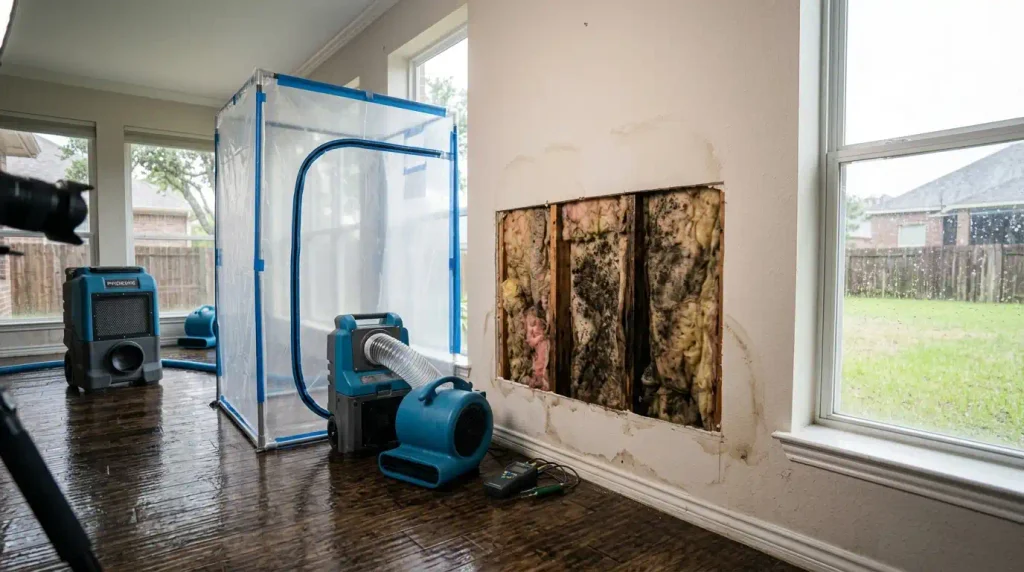
Mold needs moisture, food, and time. Drywall paper, wood, and carpet backing give it plenty of food. In a warm Dallas home, the time window is short.
According to CDC mold guidance, homes should be cleaned and dried fully within 24 to 48 hours after a flood. The CDC also recommends keeping indoor humidity no higher than 50% all day long. The EPA’s mold and moisture resources put it simply: the best way to control mold growth is to control moisture.
What Happens After Water Exposure
| Time After Water Loss | What Happens | Our Response |
|---|---|---|
| 0 to 1 hour | Water spreads, wicks into drywall and carpet | Stop source, begin extraction |
| 1 to 24 hours | Drywall swells, odor starts, furniture stains | Full extraction, drying setup |
| 24 to 48 hours | Mold growth can begin on porous materials | Antimicrobial treatment, aggressive drying |
| 48 hours to 1 week | Visible mold possible, wood warps, Category 1 may become Category 2 | Containment, material removal |
| 1 week or more | Structural risk, major mold growth, health concerns | Full remediation and rebuild |
Mold Warning Signs to Watch For
- Musty odor that gets stronger when the AC runs
- Dark spots on baseboards, ceilings, or behind furniture
- Peeling paint or bubbling wall texture
- Worsening allergy symptoms indoors
- Soft drywall near tubs, sinks, or exterior walls
When growth is already present, our licensed mold remediation services use containment, HEPA filtration, and proper removal. We also fix the moisture source, because cleaning mold without solving the water problem only buys a few weeks.
The CDC does not recommend routine mold testing for most homes. If you see or smell mold, it needs to be removed regardless of type.
Slab Foundations, Slab Leaks, and Burst Pipes
Most Dallas homes sit on concrete slab foundations. Plumbing runs under or through the slab. When the clay soil shifts, those pipes can crack.
A slab leak often shows up slowly. Signs include warm spots on the floor, a higher water bill, the sound of running water, or cracked tile. Our technicians frequently see this in local slab-foundation homes built before the 2000s, especially those with older copper or cast iron lines.
Slab Leak vs. Burst Pipe Comparison
| Factor | Slab Leak | Burst Pipe |
|---|---|---|
| Speed | Slow, can last weeks | Sudden, gallons per minute |
| Detection | Hard, often hidden | Obvious within minutes |
| Common cause | Soil movement, corrosion | Freezing, high pressure, old fittings |
| Typical damage | Flooring, subfloor, mold under cabinets | Walls, ceilings, multiple rooms |
| Insurance coverage | Often covers resulting damage, may limit pipe access costs | Usually covered as sudden and accidental |
| Repair need | Plumber plus leak detection | Plumber plus emergency drying |
Frozen pipes remain a real risk after Uri. Pipes in exterior walls, attics, and garages are most exposed. Our burst pipe water damage recovery team handles extraction and drying while your plumber repairs the line.
Winter Pipe Protection Checklist
- Insulate exposed pipes in attics and garages
- Drip faucets on exterior walls during hard freezes
- Open cabinet doors under sinks to let warm air reach pipes
- Disconnect garden hoses before the first freeze
- Know your shutoff location before an emergency hits
Cost Breakdown for Water Damage Restoration Dallas TX
Pricing depends on square footage, water category, drying class, and how long water sat before help arrived. The ranges below reflect typical 2026 DFW market estimates. Your actual quote will depend on an on-site inspection.
Mitigation Cost Breakdown (Dallas Market)
| Service | Typical 2026 Range | What Drives the Price |
|---|---|---|
| Inspection and moisture mapping | $0 to $350 | Often included with mitigation work |
| Water extraction | $1.50 to $4.00 per sq ft | Water depth, flooring type |
| Air mover rental (daily) | $25 to $45 per unit | Number of units, days on site |
| LGR dehumidifier (daily) | $75 to $150 per unit | Unit size, drying class |
| HEPA air scrubber (daily) | $75 to $150 per unit | Contamination level |
| Antimicrobial application | $0.30 to $1.00 per sq ft | Area and category |
| Drywall flood cuts and removal | $2 to $5 per sq ft | Height of cut, debris volume |
| Hardwood mat drying | $500 to $2,500+ | Floor area, system count |
| Mold remediation (small to mid) | $1,500 to $7,000+ | Size, containment needs |
Typical Total Project Ranges
| Scenario | Estimated Total |
|---|---|
| Small Category 1 leak, one room | $1,000 to $3,500 |
| Burst pipe, multiple rooms | $3,500 to $10,000 |
| Slab leak with flooring removal | $4,000 to $12,000 |
| Category 3 flood, first floor | $8,000 to $30,000+ |
| Mitigation plus full rebuild | $10,000 to $50,000+ |
How to Keep Costs Down
- Call within hours, not days
- Stop the source right away
- Approve early removal of carpet pad and wet insulation
- Keep HVAC running in unaffected areas if ducts are clean
- Avoid DIY drying of wall cavities, which often traps moisture
Insurance Tips for DFW Homeowners
Insurance is where many Dallas homeowners lose money. It is not usually bad faith. It is a lack of documentation or a misunderstanding of coverage.
What Is Usually Covered vs. Excluded
| Situation | Standard Homeowners Policy | Flood Policy (NFIP or Private) |
|---|---|---|
| Sudden pipe burst | Usually covered | Not applicable |
| Water heater failure | Usually covered | Not applicable |
| Gradual slow leak | Often excluded | Not applicable |
| Rising floodwater | Excluded | Covered |
| Storm water through damaged roof | Usually covered | Not applicable |
| Sewer backup | Only with an endorsement | Covered if caused by flooding |
| Mold from covered loss | Often capped (limits vary) | Limited coverage |
When rising water enters your home from outside, you need a flood policy. Our flood damage restoration crews work with both homeowners and flood adjusters to document each loss correctly.
Claim Tips That Protect Your Payout
- Report the loss quickly. Most policies require prompt notice.
- Take dated photos before cleanup starts.
- Keep damaged materials or samples until the adjuster approves removal.
- Save every receipt, including hotel stays and meals if you were displaced.
- Request drying logs from your restoration company.
- Review your policy for mold caps and sewer backup endorsements.
- Know the NFIP waiting period. New flood policies usually take 30 days to begin.
- Get a written scope before reconstruction begins.
You have the right to choose your own restoration company. Your insurer may suggest a preferred vendor, but Texas homeowners can hire the contractor they trust.
Moisture Inspection Checklist for Dallas Homeowners
A quick monthly walk-through catches most problems early. It takes about 15 minutes.
Inside the Home
- Check under kitchen and bathroom sinks for drips or stains
- Look at ceilings below bathrooms and the AC unit
- Inspect water heater base for rust or pooling
- Check washing machine hoses for bulges or cracks
- Feel floors for warm or soft spots
- Test indoor humidity with a hygrometer (aim for 30% to 50%)
Outside the Home
- Clear gutters and downspouts before spring storms
- Confirm soil slopes away from the foundation
- Look for new foundation cracks or gaps at doors
- Check roof shingles after any hail event
- Watch your water bill for unexplained jumps
DIY vs. Professional Water Damage Restoration Dallas TX
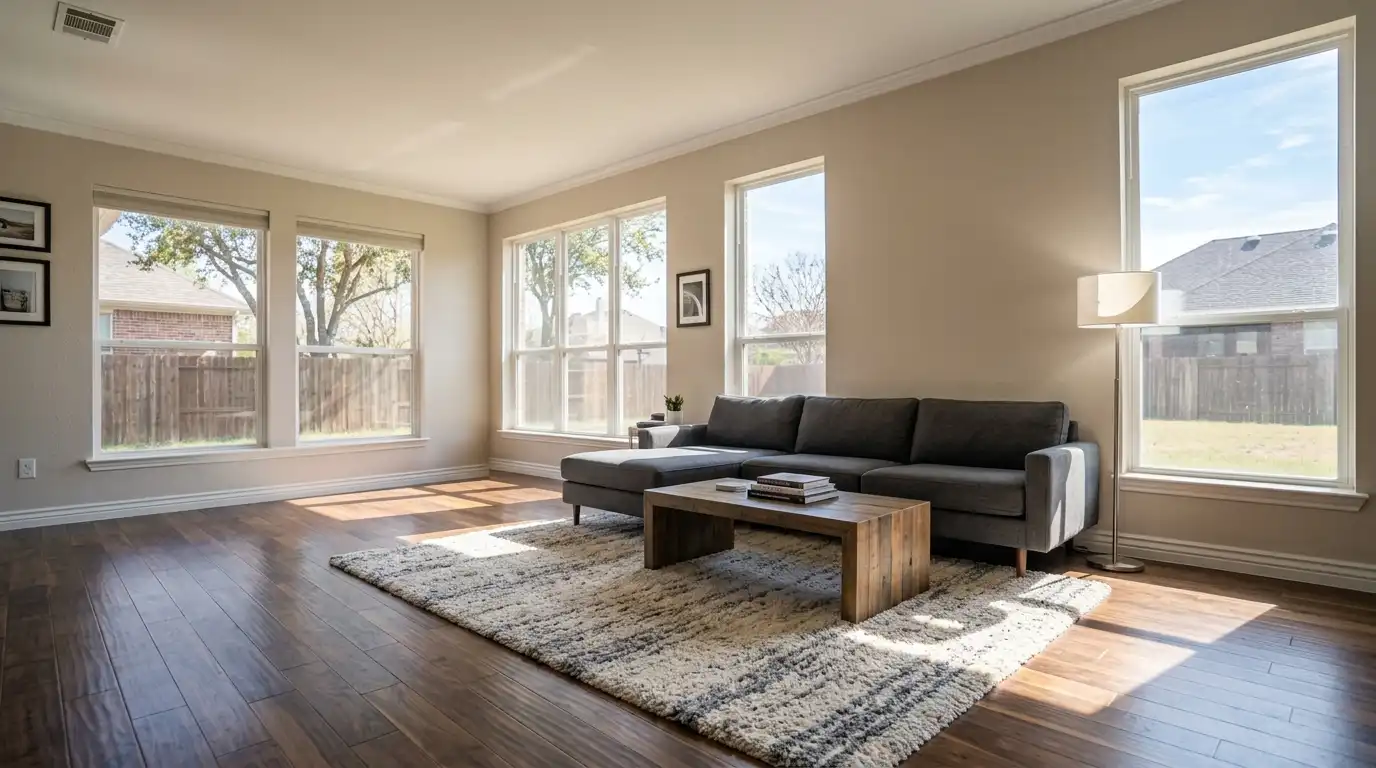
Some small spills are fine to handle yourself. Larger losses need professional equipment and training.
DIY Drying
Pros:
- Lower upfront cost for minor spills
- Immediate response for small Category 1 water
Cons:
- Household fans cannot dry wall cavities or slabs
- No moisture readings to prove materials are dry
- Higher risk of hidden mold
- Weaker documentation for insurance claims
Professional Restoration
Pros:
- Commercial extraction and dehumidification
- Moisture mapping finds hidden water
- S500-based drying documentation
- Faster drying lowers mold risk
Cons:
- Higher upfront cost if the loss is not covered
- Equipment noise for several days
When to Call a Professional
- Water has spread beyond one small area
- Water came from a toilet, sewer, or flood
- Ceilings are wet or sagging
- Water sat for more than 24 hours
- Hardwood floors are cupping
- You smell mildew or see spots
Choosing the Right Company in DFW
Not every company offering water damage restoration Dallas TX property owners find online works to the same standard. Ask these questions before you sign anything.
| Question to Ask | Good Answer | Red Flag |
|---|---|---|
| Are your technicians IICRC certified? | Yes, with WRT or ASD certifications | Vague or no answer |
| Do you hold a TDLR mold license? | Yes, or they partner with a licensed firm | “You don’t need one” |
| Will you provide drying logs? | Daily readings, photos, and reports | No documentation |
| Do you work with insurance? | Yes, and they explain the process | Pressure to sign an assignment right away |
| What is your response time? | Specific window, 24/7 availability | No clear commitment |
| Do you carry liability insurance? | Yes, with proof on request | Hesitation |
FAQs
How long does water damage restoration take in Dallas?
- Drying: usually 3 to 5 days for most homes
- Hardwood or slabs: 1 to 4 weeks
- Rebuild: 1 to 6 weeks depending on scope and materials
Can I stay in my home during drying?
- Usually yes, for Category 1 losses
- Category 3 water or active mold may require you to leave temporarily
- Equipment is loud and runs around the clock
Will my wet carpet need to be replaced?
- Category 1: carpet often saved, pad usually replaced
- Category 2: case by case
- Category 3: carpet and pad are removed
Does homeowners insurance cover flooding in Dallas?
- No, standard policies exclude rising floodwater
- You need NFIP or private flood coverage
- Sudden pipe bursts are typically covered
How fast can mold grow after a leak?
- Growth can begin within 24 to 48 hours
- Warm Dallas temperatures speed growth
- Controlling humidity below 50% helps prevent it
Do I need mold testing after water damage?
- The CDC does not recommend routine testing for most homes
- Visible or smelled mold should be removed regardless of type
- Testing may help in legal, real estate, or clearance situations
Why is my floor still wet days after the leak was fixed?
- Concrete slabs and hardwood hold moisture deep inside
- Surface feel is not a reliable dryness test
- Moisture meters confirm when drying goals are met
Protect Your Dallas Property Before the Next Storm
Water damage moves fast, and Dallas weather gives little warning. The homes that recover best follow three rules: stop the source, dry within 48 hours, and document everything. Strong water damage restoration Dallas TX homeowners can rely on combines IICRC drying science with honest, plain-language guidance from start to finish.
At Bob’s Water Damage Restoration, our crews handle emergency extraction, structural drying, mold remediation, and insurance documentation for homes and businesses across Texas. The sooner we get the first moisture reading, the more of your home we can save.
Water in your home right now? Shut off the main valve, take photos, and call Bob’s Water Damage Restoration 24/7. Our team will arrive with the equipment to map, extract, and dry your property the right way.
One Comment